
Under the rallying banner “Hope, Strength, and Resilience,” the Osteogenesis Imperfecta Foundation Network has launched a city-wide campaign in Abuja to raise awareness for osteogenesis imperfecta (OI), a rare genetic bone disorder that remains largely under-recognised across Nigeria’s healthcare, education, and public sectors.

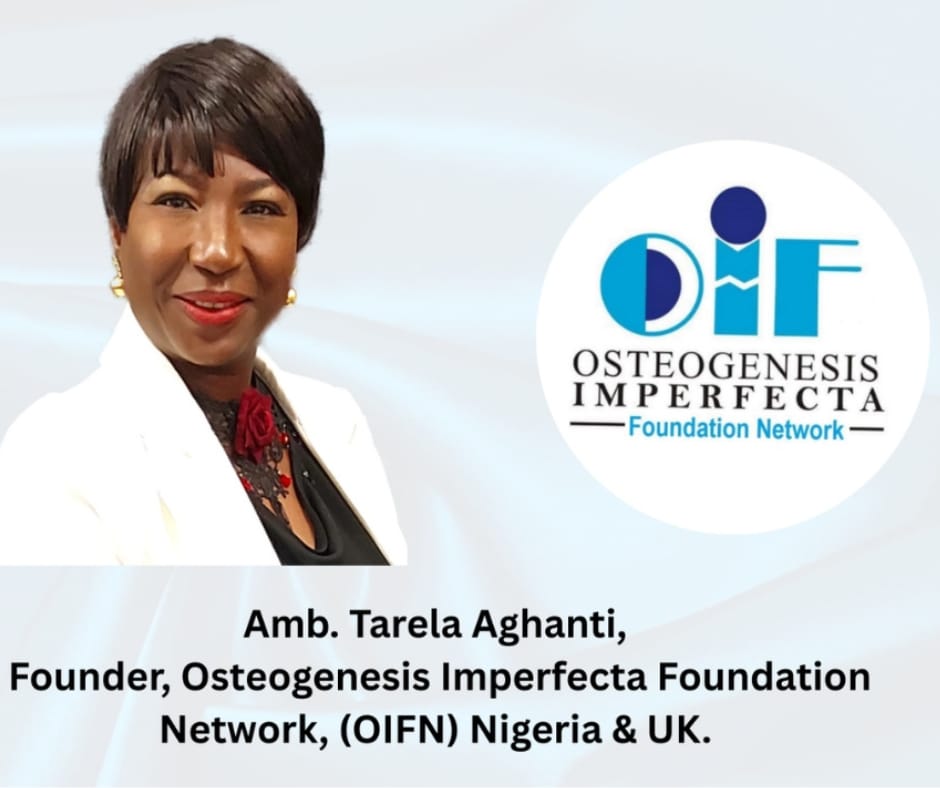
The initiative, which coincides with global OI awareness activities this May, aims to ensure that individuals living with the condition are seen, understood, and fully supported. Founder of the Osteogenesis Imperfecta Foundation Network, Tarela Aghanti, said the campaign is designed to bridge critical gaps in knowledge and inclusion by targeting three key spaces: medical, educational, and public.
In the medical sector, the campaign will engage healthcare professionals and university medical students through research-led discussions, clinical exposure, and evidence-based training. The focus is on strengthening clinical understanding of OI, improving early diagnosis, and promoting multidisciplinary care involving orthopaedics, genetics, physiotherapy, and mental health. “By embedding research at the core of this initiative, we’re ensuring that awareness translates into better clinical competence, improved patient outcomes, and a more responsive healthcare system for rare diseases,” Aghanti noted.
The education component extends the drive into universities and training institutions, integrating OI into academic dialogue and case-based learning. Organisers say exposing future healthcare professionals to rare conditions early will nurture practitioners who are both knowledgeable and empathetic, embedding inclusive care into the foundation of medical training.
Public engagement will culminate at Eagle Square, where families, policymakers, advocates, and community members will gather to share lived experiences and drive broader societal conversations. “Awareness must exist where people live, interact, and make decisions,” Aghanti said. “This is where clinical and academic knowledge meets everyday life.”
According to the Foundation, the movement’s core goals are to inform, connect, and inspire action. Increased awareness is expected to lead to earlier recognition of OI, reduced stigma, stronger support systems, and greater interest in rare disease research and innovation. For patients and families, the benefits include dignity, visibility, and clearer care pathways. For healthcare systems, it means improved diagnosis and collaboration.
“‘Hope, Strength, and Resilience’ is more than a theme — it is a commitment to visibility, equity, and lasting impact,” Aghanti said.
“This May, we raise our voices for awareness, inclusion, and a future where individuals living with OI are fully embraced by healthcare systems and society. Because awareness is the way forward, and inclusivity is the future we are building together.”
The Osteogenesis Imperfecta Foundation Network operates in both Nigeria and the UK.
